

DRAINAGE AND EROSION CONSTRUCTION SERVICES
Stream Channel Restoration Bioremediation in North Texas
Failing stream channels can quickly threaten sidewalks, ponds, utilities, drainage systems, roads, and nearby property. Cardinal Strategies helps HOA and community managers, property stakeholders, and municipalities stabilize eroding stream channels with long-term restoration solutions designed to protect infrastructure and minimize environmental impact.
Serving North Texas within 200 miles of 75098, including Dallas-Fort Worth, Dallas County, Collin County, Tarrant County, and Rockwall County.
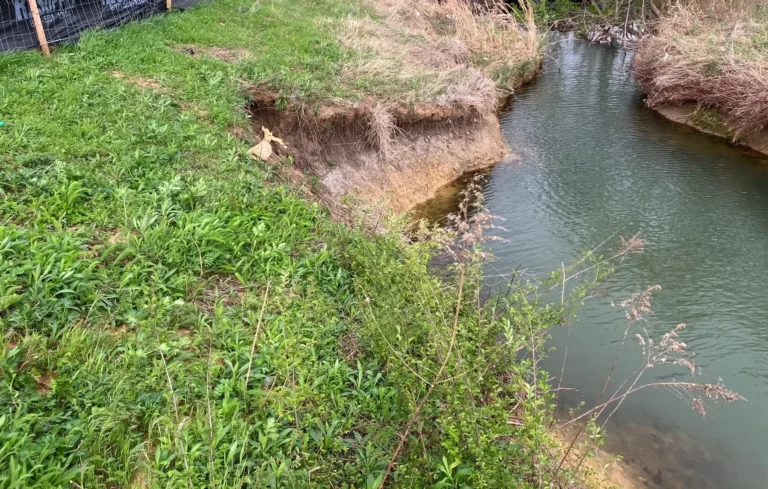
Your Erosion Crisis Contractors
Serving North Texas within 200 miles of 75098, including Dallas-Fort Worth, Dallas County, Collin County, Tarrant County, and Rockwall County.
Cardinal is your go-to erosion crisis contractor in the Dallas-Fort Worth Metroplex, North Texas, and beyond. We specialize in designing solutions using a combination of soft armor and native plants to restore the bank’s stability while creating a natural aesthetic. Cardinal’s goal is to develop long-lasting solutions with minimal impact on the surrounding environment.
Project Highlight: Windsong Ranch Channel Bank Remediation
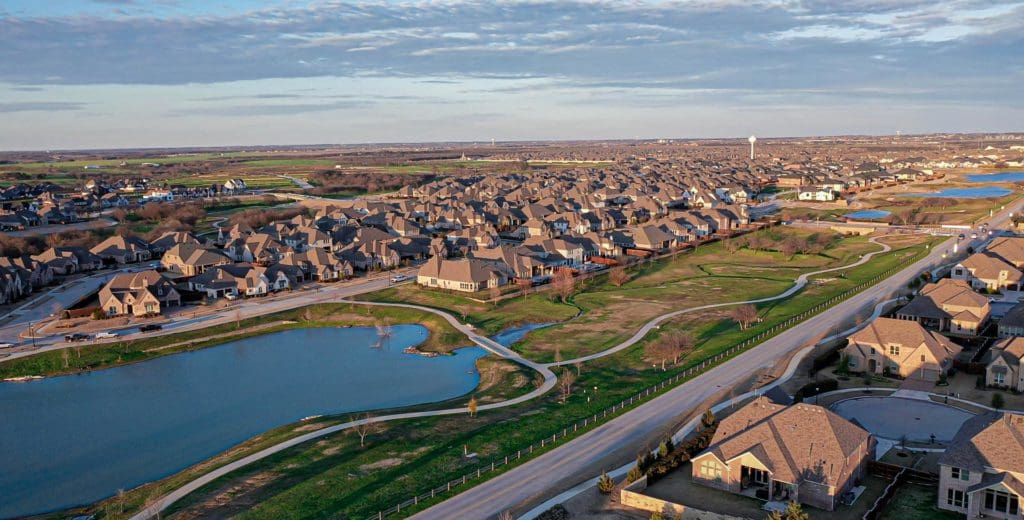
At Windsong Ranch, a master-planned community in North Texas, channel bank failure developed along Doe Branch Tributary 6 after a sanitary sewer line was constructed nearby. Water migrated along the sewer trench, surfaced back into the creek, and caused the creek bank slope to slide and fail.
To stabilize the area, the project included:
- installation of a geoweb system
- construction of a reinforced earth bank
- live staking of native water plants within the channel
This example is useful because it shows the kind of real-world failure mechanism many communities face: drainage movement, infrastructure interaction, bank instability, and the need for a practical restoration solution rather than a cosmetic fix.
A Failing Stream Channel Can Put Community Assets at Risk
In growing communities across North Texas, stream channels and drainage corridors are under increasing pressure from development, storm events, concentrated runoff, and changing flow conditions. What starts as erosion along a stream bank can become a larger structural and maintenance problem if it is not addressed early. Failing channels may threaten sidewalks and trails, ponds and drainage features, sewer and utility corridors, roads and crossings, nearby homes, lots and common areas, municipal infrastructure and public spaces. For HOA and community managers, unresolved channel erosion can create safety concerns, budget pressure, resident complaints, and escalating repair costs. For municipalities, it can affect infrastructure reliability, stormwater performance, and long-term maintenance planning.
What is Stream Channel Restoration Bioremediation?
Stream channel restoration bioremediation combines structural stabilization with environmentally responsible restoration methods to repair eroding channels and improve long-term bank performance. The goal is not just to slow visible erosion, but to create a more stable channel system that supports function, resilience, and a more natural appearance.
Depending on site conditions, this may include a combination of:
- channel bank stabilization
- erosion repair
- reinforced earth solutions
- soft armor applications
- vegetated stabilization
- native planting and live staking
- channel restoration for long-term bank integrity
- emergency repair for active failure areas
- design-build implementation
- permitting support and inspections
This approach aligns with the kinds of stream restoration, urban channel bank stabilization, and erosion control topics already central to your authority-building efforts.
Built for Community Managers and Municipalities in North Texas
It is also relevant for:
- HOA boards
- residential managers
- facilities and operations leaders
- municipal public works teams
- municipal parks and planning departments
- city engineering stakeholders
- property managers overseeing erosion-prone assets
If a community stream channel is actively eroding, threatening amenities, or showing signs of slope movement, this is the time to evaluate it.
Why Communities and Municipalities Choose Cardinal Strategies
Cardinal Strategies brings together specialty construction experience, design-build capability, and natural restoration-focused field expertise to solve complex channel and erosion problems across North Texas.
What Sets Cardinal Apart
- More than 50 years of experience in specialty construction and drainage-related work
- Design-build capability for coordinated planning and execution
- Long-term stabilization focus, not just short-term patchwork
- Native planting expertise that supports restoration goals
- WBE, SBE, and HUB certified
- Regional experience serving North Texas communities and public-sector needs
Cardinal’s positioning around channel restoration, drainage construction, and stormwater-related work is already well aligned to the market you serve.
Stream Channel Restoration Services
Cardinal Strategies provides support for stream and channel issues such as:
Channel Bank Stabilization
Repairing unstable banks and slope failure areas to reduce ongoing erosion and protect adjacent infrastructure.
Erosion Repair
Addressing active washout, undercutting, and degraded streambank conditions before they expand into larger failures.
Vegetated Stabilization
Using native plant strategies and restoration-minded methods to support bank integrity and improve long-term performance.
Emergency Repair
Responding when channel failure creates urgent risk for community assets, utilities, access, or drainage performance.
Design-Build Delivery
Combining practical engineering coordination and field execution to simplify complex restoration projects.
Permitting Support and Inspections
Helping stakeholders evaluate site conditions and move projects forward with a clearer understanding of repair options.
What Working with Cardinal Looks Like
1. Schedule a Consultation
Start with a conversation about the failing stream channel, visible damage, location, and urgency.
2. Evaluate Site Conditions
Review the erosion pattern, bank instability, surrounding assets, drainage behavior, and likely causes.
3. Define the Right Restoration Approach
Determine the combination of stabilization, reinforcement, vegetation strategy, and implementation scope needed for the site.
4. Move Into Execution
With design-build capability and specialty construction experience, Cardinal can help move the project toward a practical, long-term solution.
FAQ About Stream Channel Restoration Bioremediation
What is stream channel restoration bioremediation?
Stream channel restoration bioremediation is the repair and stabilization of eroding or failing stream channels using a combination of structural methods and environmentally responsible restoration strategies, such as reinforced stabilization, soft armor, native planting, and live staking.
When should an HOA or community manager call about stream bank erosion?
An HOA or community manager should schedule an evaluation when erosion begins threatening sidewalks, ponds, drainage systems, utility corridors, common areas, or nearby homes. Early action can help prevent larger failures and higher repair costs.
Do municipalities use stream channel restoration services?
Yes. Municipalities use stream channel restoration services to protect roads, drainage corridors, utilities, stormwater infrastructure, and public spaces from erosion, slope instability, and channel movement.
What causes stream channel failure in North Texas?
Common causes include concentrated runoff, extreme storm events, urban development, changing drainage patterns, unstable slopes, utility conflicts, and ongoing erosion that weakens the bank over time.
How do I get started?
Schedule a consultation with Michael Anderson to discuss the stream channel condition, project location, visible damage, and next steps.